By Barbara T. Osgood, PhD
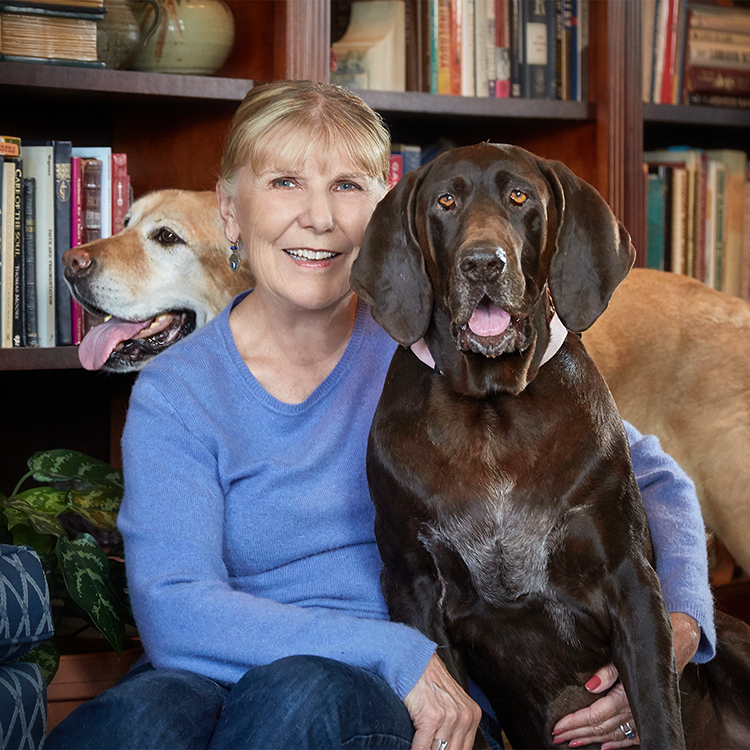
Women’s History Month, established by Congress is 1981, is a celebration of the contributions that women have made throughout the history of our country toward science, politics, law, sports, the arts, entertainment, and other fields. It also honors those women who may not have become rich or famous, but who have contributed countless hours to support their churches, schools and voluntary organizations. And it honors what we now refer to as the First Wave of Feminism, when, in the 1800s, suffragists fought for women’s right to vote, and the Second Wave of Feminism, in the 1960s and 1970s, that obtained many other rights and privileges for women, focusing on reproductive rights, financial independence, and workplace equality.
I was proud to be a participant in the Second Wave.
When I was a little girl growing up in a small town in Upstate New York it never occurred to me that I might have a “career” or be involved in a women’s movement. Girls of my generation, born during the Great Depression and growing up during World War II, knew from an early age what our destiny would be. We were to be wives and mothers. We didn’t have careers.
From childhood the path forward was clear. There were toys like bride dolls and baking sets; there was a high school counselor who said “girls don’t take trigonometry”; and a bachelor’s degree from Cornell University, where, among other things, I learned to how to iron a man’s shirt, and the best way to clean windows. Cornell assured us that we were being prepared to be “educated wives and mothers.” I married during my senior year in college, and upon graduation embarked on my predestined role. I had been so well socialized that it was of no immediate concern that I couldn’t have a credit card in my own name or open a bank account without my husband’s permission.
But life has a way of changing the most careful plans. My mother died of cancer too young. My second child died at birth. Suddenly what seemed satisfying and significant, no longer seemed that. Being president of the garden club, PTA class mother, or chairman of the church women’s society, soon lost its luster, although years later I realized how helpful the experience had been.
In 1963, Betty Friedan, who lived not far from me, wrote a seminal book “The Feminine Mystique” that challenged the belief that a woman’s only role was to marry and bear children. More and more women were attracted to her message, and a movement began, uniting women under the issues of social equality and reproductive rights. Women were writing and marching and appearing on television. Their message was “You can do this!”
Opportunities were opening up for women. I decided to take them.
I went back to school for another degree. I obtained an M.S. in Family and Consumer Studies from Lehman College of the City University of New York and was invited to stay there in a faculty position. I taught there for three years, and probably learned as much from my students as they learned from me. I taught students who lived in the projects of the South Bronx, Orthodox Jews, Black Muslims, students who were the first in their family to attend college. For a young innocent woman from white suburbia, it was a life changing experience.
After I had been at Lehman for three years, my department chairman urged me to get my PhD so that I would have the credentials for a professorship. I returned to Cornell which, by this time, had been transformed from the College of Home Economics to the College of Human Ecology. Thus began a four-year ordeal to get my doctorate and, at the same time, carry out my responsibilities as a wife, mother, and granddaughter. Every week, I drove four hours to Cornell to become a doctoral student, then drove four hours back home to assume my housewife role. I joked that Superman had his telephone booth, and I had a green Chevy Nova!
During my time at Cornell, I was appointed a Visiting Assistant Professor, and taught an undergraduate lecture and a graduate seminar on the economics and sociology of housing. By the time I had completed the PhD, Cornell had another assignment for me: for a year I would have the title of Research Associate and serve as a liaison from Cornell to USDA in Washington. During that year I worked with regional research committees of land grant universities all over the U.S. Thus began my contact with SCS and my career at Agriculture.
I began my career with SCS as the first National Sociologist and one of the first professional women to be hired by the agency. The Chief at that time, Norman Berg, wanted someone with the expertise to help project engineers and field people to better understand the farmers and ranchers with whom they worked. Soil conservation in those days was almost entirely voluntary, and Chief Berg knew that farmers and ranchers would not adopt practices without reason. Some were economic, but some were sociological.
It was a wonderful assignment for a sociologist! I loved traveling all over the country to work with DCs, visit farmers and ranchers, and put on workshops. I like to think that I also shattered a few small glass ceilings along the way. I was the first woman to head a technical staff, the Economics, Social Sciences and Evaluation Staff in the Northeast National Technical Center. I was the first woman to achieve the status of State Conservationist, in New Jersey, and one of the first women to be an Assistant Chief for the Northeast. I also worked to get NRCS women into upward mobility positions, and to make sure that their position descriptions reflected the grade level that was appropriate and equal to men in the same position.
Through NRCS I also had opportunities for unusual assignments. I gave a lecture in FAO in Rome to a group of African secretaries of agriculture. On another assignment, I joined an EPA scientist to interview the Secretaries of Agriculture and Environment in Hungary, Slovakia, Czech Republic, and Romania regarding contamination of agricultural land. In Mexico, I had an opportunity to work with local rural development teams in the Yucatan Peninsula.
After 21 years with NRCS, I retired as a Federal Senior Executive and spent a few years consulting with an environmental firm, writing the Social Impact Assessment chapters for environmental impact statements, mostly for offshore windfarms in the North Atlantic.
Of course, employment is never enough for a complete life. Thirty years ago, I rescued and adopted a black Labrador retriever named Moody, and I was immediately drawn into the rescue’s activities. I transported dogs, pulled them from the shelter, fostered many dogs, and worked as an adoption coordinator. I soon learned that old dogs died in the shelter, because most people do not adopt old dogs. They became my passion, and I started adopting more of them. I just recently adopted my twenty-fourth senior dog, a 12-year-old, 105-pound yellow Lab named Remi, whose family took him to the shelter because he was “too old”.
In middle age, after many bouts of severe depression, I was finally diagnosed as bipolar. There was therapy, of course, but the best therapy has been my dogs. Without their companionship, I’m sure I would not have survived. I have written a book about my dogs, how they have rescued me from the severe impacts of bipolar disorder and saved my life. There is a bit about NRCS in the book, too! The book is called “84 Paws: A Life With Old Labs.” The proceeds from it go to my rescue, Lab Rescue LRCP.
In November, I will be 90 years old. When I look to the past, there are many memories of good times and bad times. I am proud of what I have accomplished as a woman who wasn’t supposed to have a career. I am proud of the many women I helped to achieve their goals. I look back with such great satisfaction at the farmers and ranchers I supported, the people of New Jersey, whose state I got to know and love, and my colleagues in NRCS, who never failed to amaze me with their knowledge, expertise and work ethic.
It has been a good run.
But now, the hard work and passion of many women since the beginnings of feminism is being challenged. There are those who would like women to return to the status they had in the 1950s. Women’s History Month, by highlighting how the accomplishments of all women have benefitted the nation, demonstrates what a tragedy it would be to return to the past.
My time is limited, but I hope the women who have followed me will not allow their rights to be eroded. They are too valuable in so many ways!
Our work should equip
The next generation of women
To outdo us in every field.
This is the legacy we’ll leave behind.
– Rupi Kaur
 ARCSE
ARCSE 